arrow_back Back to All Publications
SaaS Architecture February 5, 2026 11 min read

Designing Resilient Multi-Tenant SaaS Engines: The Architecture Behind holys.social

A
Senior Enterprise Architecture Team Ex-Oracle Systems & SaaS Infrastructure Practice
Designing Resilient Multi-Tenant SaaS Engines: The Architecture Behind holys.social
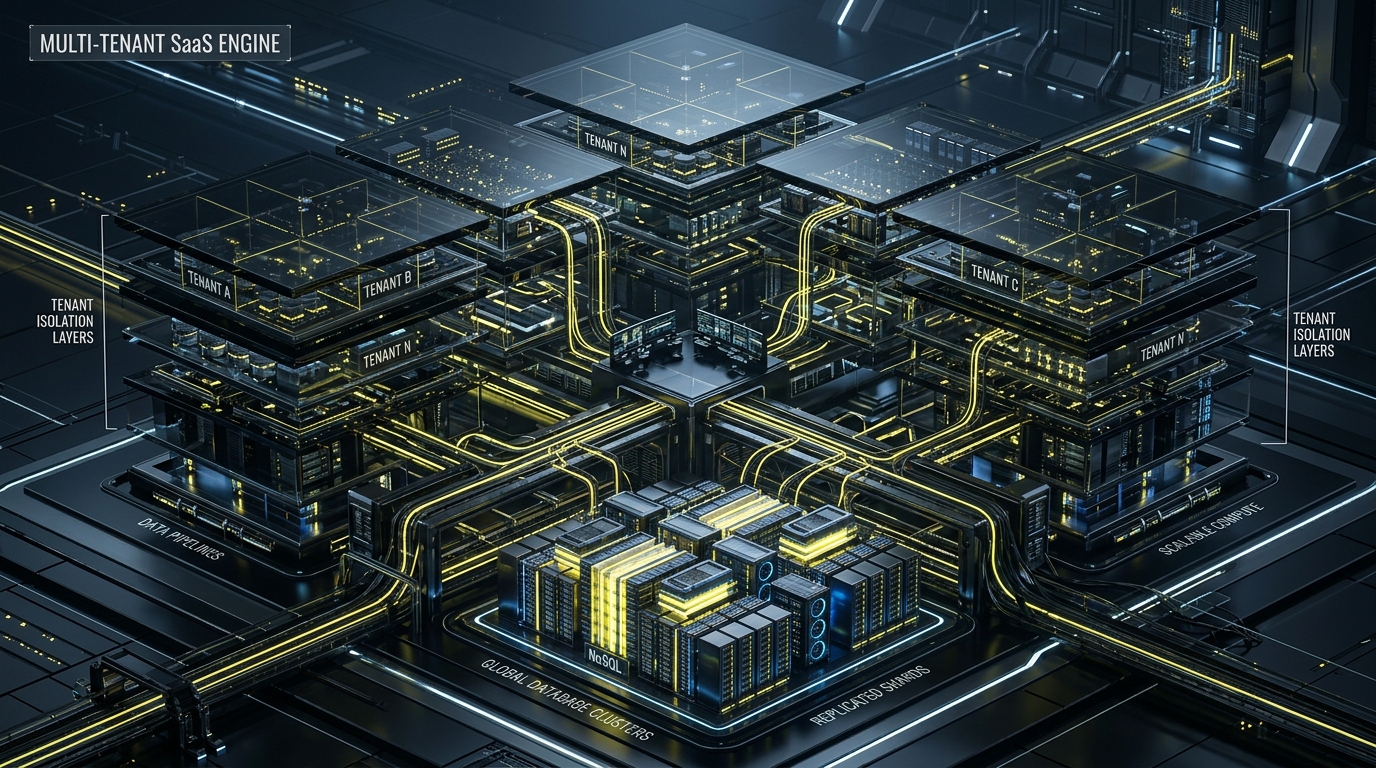
8K Technical Architecture Visualizer ADWORTHS.NET Engineering Labs
terminal Executive Summary & Key Architectural Takeaways

Building enterprise-grade SaaS platforms requires balancing cost efficiency against rigorous tenant security and predictable sub-second latency. This paper shares our production architecture powering the next-generation social engagement platform holys.social, from multi-tenant data tiering to distributed WebSocket synchronization.

1. Multi-Tenant Data Isolation Strategies

Choosing the correct multi-tenancy model governs the longevity of any SaaS architecture. The three canonical tiers are:

1. Database-Per-Tenant

Maximum isolation and regulatory compliance. High infrastructure cost; maintenance scales linearly with tenant count.

2. Schema-Per-Tenant

Shared database instance with distinct database schemas. Strong boundary with reduced hardware footprint.

3. Shared Table (RLS)

Tenant ID column enforced via Oracle Virtual Private Database (VPD) or PostgreSQL Row-Level Security. Optimal density and cost.

2. Production Blueprint: Scaling holys.social to 10M+ Daily Events

For holys.social, our team deployed a hybrid tiering architecture. High-volume engagement events and interactive feeds utilize Row-Level Security on high-availability clustered storage, combined with geo-replicated Redis clusters for instant read-side cache hydration.

To eliminate cache stampedes when viral topics trend, we implement probabilistic early expiration (XFetch algorithm) in our caching middleware, ensuring hot keys are asynchronously refreshed before TTL expiration.

[Client Devices] ──► [Cloudflare Edge] ──► [Envoy Mesh Gateway] ──► [Stateless SaaS Nodes] ──► [Redis Cluster + Exadata RAC]

3. 99.999% SLA Resiliency & Blue/Green Deployments

True enterprise multi-tenancy requires zero-downtime rolling upgrades. Database schema alterations follow the expand-contract pattern:

  1. Expand: Add nullable columns or new tables without altering existing contracts.
  2. Migrate: Dual-write data across legacy and target fields via background transactional workers.
  3. Contract: Gracefully deprecate old attributes once all microservice pods are running the new release.
Direct Architect Consultation

Deploying or Optimizing High-Scale Architecture?

Our veteran engineers provide hands-on system audits, Exadata zero-downtime tuning, and custom SaaS cloud performance engineering.